
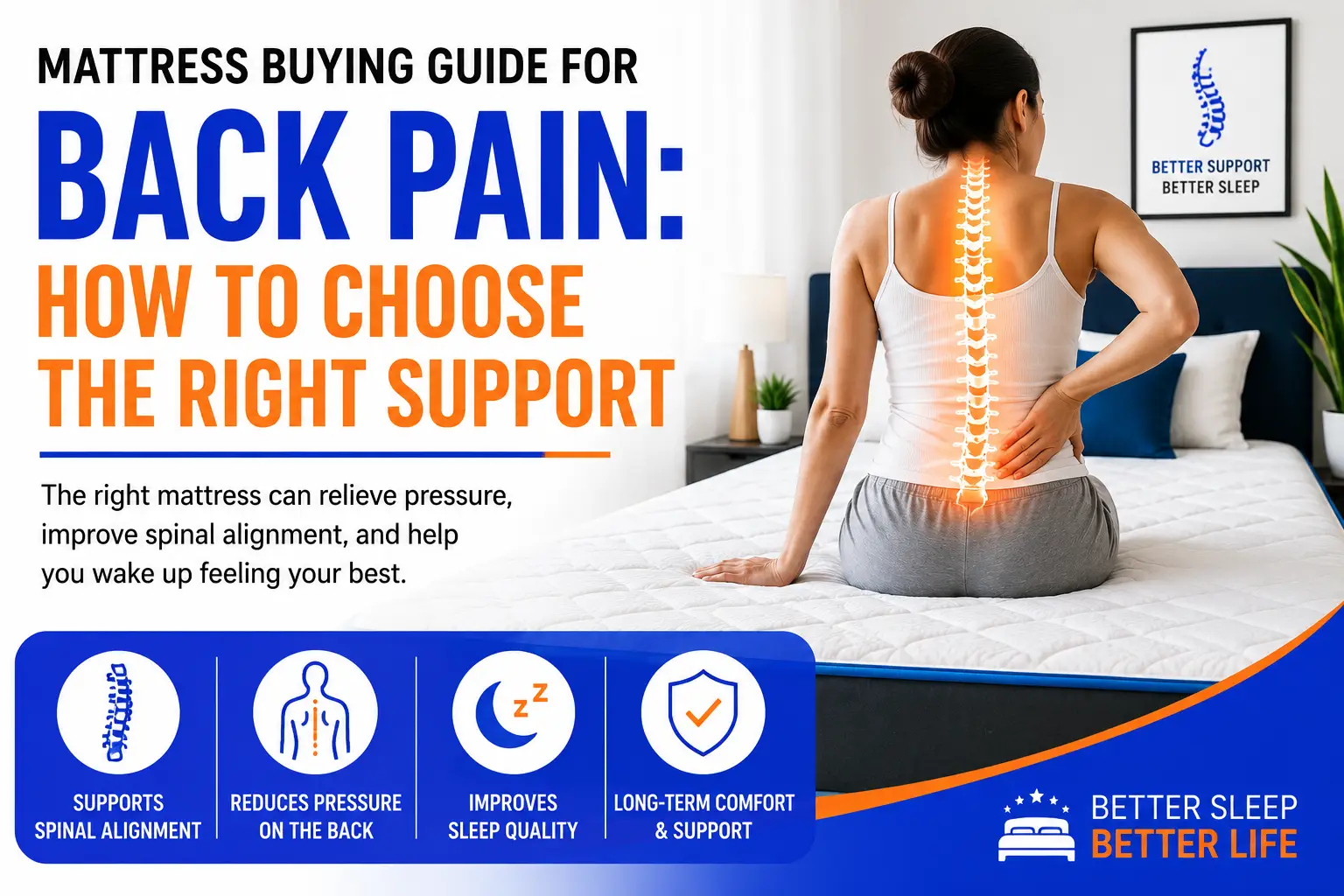
Back pain is one of the most common health complaints among adults, affecting sleep quality, daily comfort, and overall well-being. While many factors can contribute to back pain, your mattress plays a larger role than you might think. If you regularly wake up with aches, stiffness, or discomfort, your bed may not be providing the support your body needs.
Choosing the best mattress for back pain can significantly improve sleep quality and help reduce pressure on your spine. The right mattress supports your body’s natural alignment, distributes weight evenly, and allows muscles to relax and recover overnight.
In this guide, we’ll explore how mattresses affect back pain, what features to look for in a supportive mattress, and how to find the ideal option for maintaining proper spinal alignment.
Why Your Mattress Matters for Back Pain
Your spine naturally forms an S-shaped curve. During sleep, your mattress should support these natural curves while keeping your body properly aligned. A mattress that is too soft can allow your hips and shoulders to sink excessively, while a mattress that is too firm can create uncomfortable pressure points.
When your spine is unsupported for several hours each night, the muscles and ligaments surrounding it must work harder to compensate. Over time, this can contribute to stiffness, discomfort, and chronic pain.
A supportive mattress helps:
- Keep the spine aligned
- Reduce pressure on joints
- Support muscle recovery
- Improve sleep quality
- Minimize tossing and turning
Because sleep is essential for healing and recovery, investing in the right mattress can have a positive impact on both back health and overall wellness.
Understanding Spinal Alignment During Sleep
Spinal alignment refers to maintaining the natural position of your spine while sleeping. Proper alignment prevents unnecessary stress on muscles, discs, and joints.
Regardless of your preferred sleep position, your mattress should help maintain a neutral posture. This means your ears, shoulders, hips, and knees remain properly aligned.
Signs of Poor Spinal Alignment
If your mattress is not supporting your body correctly, you may experience:
- Lower back pain upon waking
- Neck stiffness
- Shoulder discomfort
- Hip pain
- Numbness in arms or legs
- Frequent sleep interruptions
These symptoms often indicate that your mattress is no longer providing adequate support.
How Sleep Position Affects Mattress Selection
Everyone sleeps differently, and your preferred sleeping position plays a major role in determining the best mattress.
Side Sleepers
Side sleepers place more pressure on their shoulders and hips. A mattress with contouring comfort layers helps cushion these areas while maintaining alignment.
Best firmness:
- Medium-soft to medium
Back Sleepers
Back sleepers generally benefit from balanced support that keeps the lower back from sinking too deeply.
Best firmness:
- Medium to medium-firm
Stomach Sleepers
Sleeping on the stomach can place strain on the lower back. A firmer mattress helps prevent excessive sinking around the midsection.
Best firmness:
- Medium-firm to firm
Combination Sleepers
People who switch positions throughout the night often need responsive support that adapts quickly.
Best firmness:
- Medium-firm
What Makes a Supportive Mattress?
A supportive mattress is not necessarily the firmest mattress available. Instead, it provides balanced support and comfort that keeps the spine aligned while relieving pressure points.
Important features include:
- Pressure Relief: Pressure relief helps reduce stress on key areas such as the hips, shoulders, and lower back.
- Responsive Support: The mattress should adapt to body movements while maintaining consistent support.
- Durability: High-quality materials resist sagging and maintain support for years.
- Motion Isolation: For couples, minimizing motion transfer can improve sleep quality.
- Edge Support: Strong edges help prevent sagging and maximize the usable sleep surface.
Best Mattress Types for Back Pain
Memory Foam Mattresses
Memory foam is known for its ability to contour closely to the body.
Benefits include:
- Excellent pressure relief
- Customized support
- Reduced motion transfer
- Comfortable contouring
Memory foam can be particularly beneficial for individuals with joint pain or pressure-related discomfort.
Hybrid Mattresses
Hybrid mattresses combine innerspring coils with foam comfort layers.
Advantages include:
- Strong support
- Better airflow
- Enhanced durability
- Balanced comfort
Many sleep specialists recommend hybrids as one of the best options for people seeking the best mattress for back pain.
Latex Mattresses
Natural latex provides a responsive feel while maintaining excellent support.
Benefits include:
- Consistent spinal support
- Natural cooling properties
- Long lifespan
- Eco-friendly materials
Latex is ideal for sleepers who want support without the deep sink often associated with memory foam.
Innerspring Mattresses
Traditional innerspring mattresses use steel coils for support.
Advantages include:
- Strong support
- Excellent airflow
- Affordable pricing
However, modern hybrids generally provide better pressure relief and comfort.
Choosing the Right Firmness Level
Many shoppers assume firmer is always better for back pain, but that’s not necessarily true.
The ideal firmness depends on:
- Body weight
- Sleep position
- Personal preference
- Existing pain conditions
| Sleeper Type | Recommended Firmness |
|---|---|
| Side Sleepers | Medium Soft – Medium |
| Back Sleepers | Medium – Medium Firm |
| Stomach Sleepers | Medium Firm – Firm |
| Combination Sleepers | Medium Firm |
A mattress that feels comfortable while maintaining proper alignment is often the best choice.
Signs It’s Time to Replace Your Mattress
Even the highest-quality mattress won’t last forever.
Consider replacing your mattress if you notice:
- Visible Sagging: Permanent impressions indicate support breakdown.
- Increased Back Pain: New or worsening discomfort can signal that your mattress is no longer providing proper support.
- Uneven Surfaces: Lumps and soft spots affect spinal alignment.
- Poor Sleep Quality: Frequent waking or difficulty getting comfortable may be mattress-related.
- Age: Most mattresses should be replaced every 7 to 10 years.
Additional Tips for Better Back Support
A mattress alone won’t solve every sleep issue. Consider these additional strategies:
- Use a Supportive Pillow: Your pillow should keep your neck aligned with your spine.
- Stretch Before Bed: Gentle stretching can reduce muscle tension.
- Practice Good Sleep Posture: Avoid positions that excessively twist or strain the spine.
- Stay Active: Regular exercise strengthens muscles that support the back.
- Maintain a Healthy Weight: Reducing excess pressure on the spine can improve overall comfort.
Why Shop Locally for Your Mattress?
Purchasing a mattress online can be convenient, but testing a mattress in person often leads to better results.
At Boise Mattress, customers can explore different mattress types, compare firmness levels, and receive personalized recommendations from experienced sleep specialists.
Whether you’re searching for a supportive mattress or the best mattress for back pain, expert guidance can make the selection process much easier.
Conclusion
Finding the right mattress can make a significant difference in your comfort, sleep quality, and long-term back health. The ideal mattress should support your spine’s natural alignment, reduce pressure points, and accommodate your preferred sleeping position.
Whether you prefer memory foam, latex, or a hybrid design, choosing a high-quality supportive mattress can help reduce discomfort and improve the quality of your sleep. If you’re searching for the best mattress for back pain, take the time to evaluate your needs, test different options, and seek expert guidance when possible.
With the right mattress, restful sleep and better mornings may be closer than you think.
Frequently Asked Questions
What is the best mattress for back pain?
The best mattress for back pain is one that supports proper spinal alignment while providing pressure relief. Medium-firm hybrid and memory foam mattresses are often recommended.
Is a firm mattress always better for back pain?
No. A mattress that is too firm can create pressure points and discomfort. Most people benefit from a balance of support and cushioning.
How long should a mattress last?
Most quality mattresses last between seven and ten years, depending on materials and usage.
Are memory foam mattresses good for back pain?
Yes. Memory foam contours to the body, reducing pressure points and helping maintain spinal alignment.
Which mattress firmness is best for lower back pain?
Medium-firm mattresses are often considered the best option for lower back pain because they provide both support and comfort.
Can an old mattress cause back pain?
Absolutely. Sagging, worn-out mattresses often fail to support the spine properly and may contribute to discomfort.
Are hybrid mattresses good for back pain?
Hybrid mattresses are among the most popular choices for back pain because they combine supportive coils with pressure-relieving comfort layers.
How do I know if my mattress is causing my back pain?
If you wake up sore, experience increased pain in the morning, or sleep better on other mattresses, your current mattress may be contributing to your discomfort.