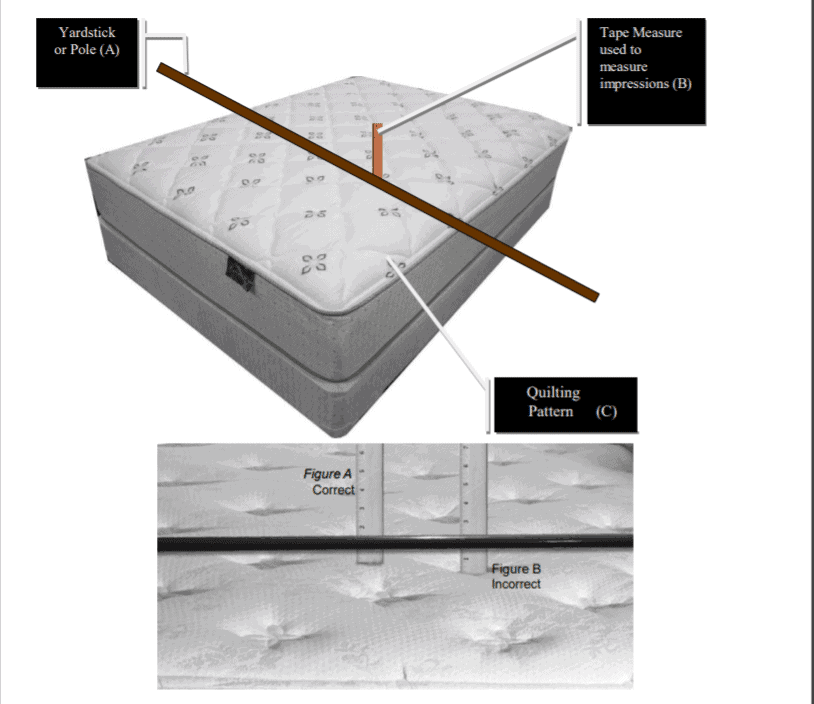
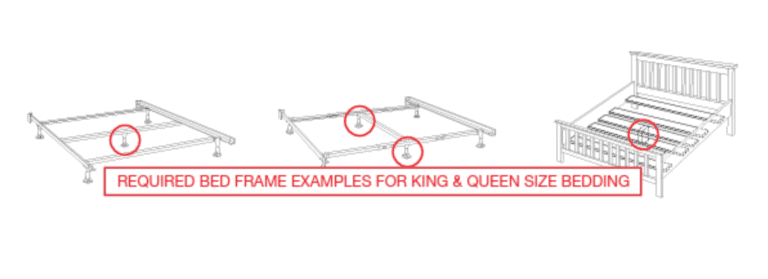
At Boise Mattress, we try and do business with only the best manufacturers so that we don’t have warranty issues. In the event that we do it is the manufacturer who makes all warranty decision their warranties typically cover loose, broken, or protruding wires, as well as sagging or body impressions of 1½” or greater, but only if the mattress has been continuously supported by a matching foundation (or equivalent) and used with an appropriate frame with center support or a minimum of 5 cross slats with center support that extends to the floor.
Your warranty coverage is offered through the manufacturer and will differ across brands. Please review your warranty card for coverage details. The law tags on your mattress will provide a code that you should reference against the warranty card for the length of your warranty period.
Blemishes, rips, tears and burns on the item will void your manufacturer’s warranty. Improper support will void your manufacturer’s warranty, for details on what is considered proper support for your mattress please refer to the warranty card received with the delivery of your mattress.
However, the warranty does NOT cover the following:
If the product is not properly supported, then damage may occur, thereby voiding the warranty. We encourage you to review the terms and conditions of the limited warranty which provides the required support needed for your product. We are unable to provide warranty assistance for a mattress that is damaged as a result of improper support.
In most cases, we will be able to locate your receipt in our records. However, it is the consumer’s responsibility to retain proof of purchase to ensure warranty coverage should we be unable to locate it for you.
To file a warranty claim for your mattress, please follow these steps:
It's crucial for customers to fully understand the specific terms and conditions of their mattress warranty. This includes the duration of coverage, the types of defects that are included, and any specific actions that could lead to a denial of a claim.
For instance, many warranties cover manufacturing defects for a certain period, typically ranging from 10 to 25 years. Customers should carefully read the warranty documentation to ensure they are aware of what is required to maintain their warranty, such as proper care and maintenance of the mattress.
Before initiating a warranty claim, customers should take certain preliminary steps to ensure a smooth process. This includes documenting any issues with the mattress and gathering necessary information to support the claim.
For example, customers should take clear photographs of the problem areas, measure any indentations, and ensure that they have their proof of purchase ready. This documentation can significantly speed up the claim process and help in getting a favorable outcome.
Customers often have questions regarding the specifics of mattress warranties, including how long they last, what to do if a warranty claim is denied, and whether warranties are transferable. Addressing these common inquiries can help empower customers to make informed decisions.
For example, many warranties are not transferable, meaning they only apply to the original purchaser. Understanding these nuances can prevent confusion and disappointment later on. Additionally, knowing the typical duration of coverage can help customers gauge whether their issues fall within the warranty period.
Maintaining a mattress warranty requires adhering to specific care guidelines set forth by the manufacturer. This often includes using a proper foundation, rotating the mattress regularly, and avoiding excessive weight on the mattress.
For instance, using a mattress protector can help prevent stains and damage, which are common reasons for warranty claims being denied. Additionally, ensuring that the mattress is supported correctly can prevent sagging, which is another factor that can void a warranty.